





Odoo ERP for eCommerce: Unify Orders, Inventory And Fulfillment for D2C Brands
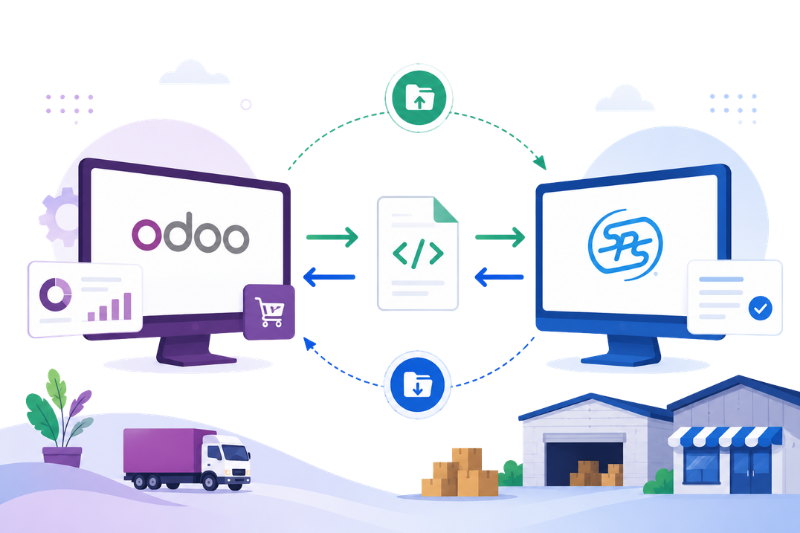
Running a growing eCommerce business across multiple sales channels means juggling orders, stock levels, shipping, returns, and accounting – often in separate, disconnected tools. Odoo ERP brings every part of your eCommerce operation into one unified platform, giving you real-time visibility from the moment an order is placed to the moment it’s delivered or returned.
Vraja Technologies, a certified Odoo partner, helps D2C brands, multi-channel sellers, and marketplace-first businesses implement, customize, and scale Odoo so they can grow without the operational chaos that comes with disconnected systems.
Why eCommerce Businesses Outgrow Spreadsheets and Disconnected Tools
As order volume grows across multiple sales channels, spreadsheets and separate tools start creating operational gaps. Inventory becomes inaccurate, shipping slows down, returns become difficult to track, and accounting reconciliation takes more time. Without an integrated ERP system, it becomes harder to understand real stock, order status, payment accuracy, and profitability.
Stock Mismatches
Inventory does not match between your website, marketplaces, warehouse, and actual available stock.
Delayed Deliveries
Manual courier assignment slows down dispatch and increases the risk of wrong carrier selection.
Return & Exchange Chaos
High-volume categories like footwear and apparel become difficult to manage without a proper return workflow.
Manual Reconciliation
Sales, payments, refunds, fees, and accounting entries require manual checking every month.
No Single Business View
You cannot easily view stock, orders, margins, profitability, and channel performance in one place.
How Odoo Helps eCommerce Retail Businesses
Odoo works as a central operating system for your online retail business. Instead of managing different tools separately, your team can handle the complete order lifecycle from one platform.
Manage Products, Variants, and SKUs Easily
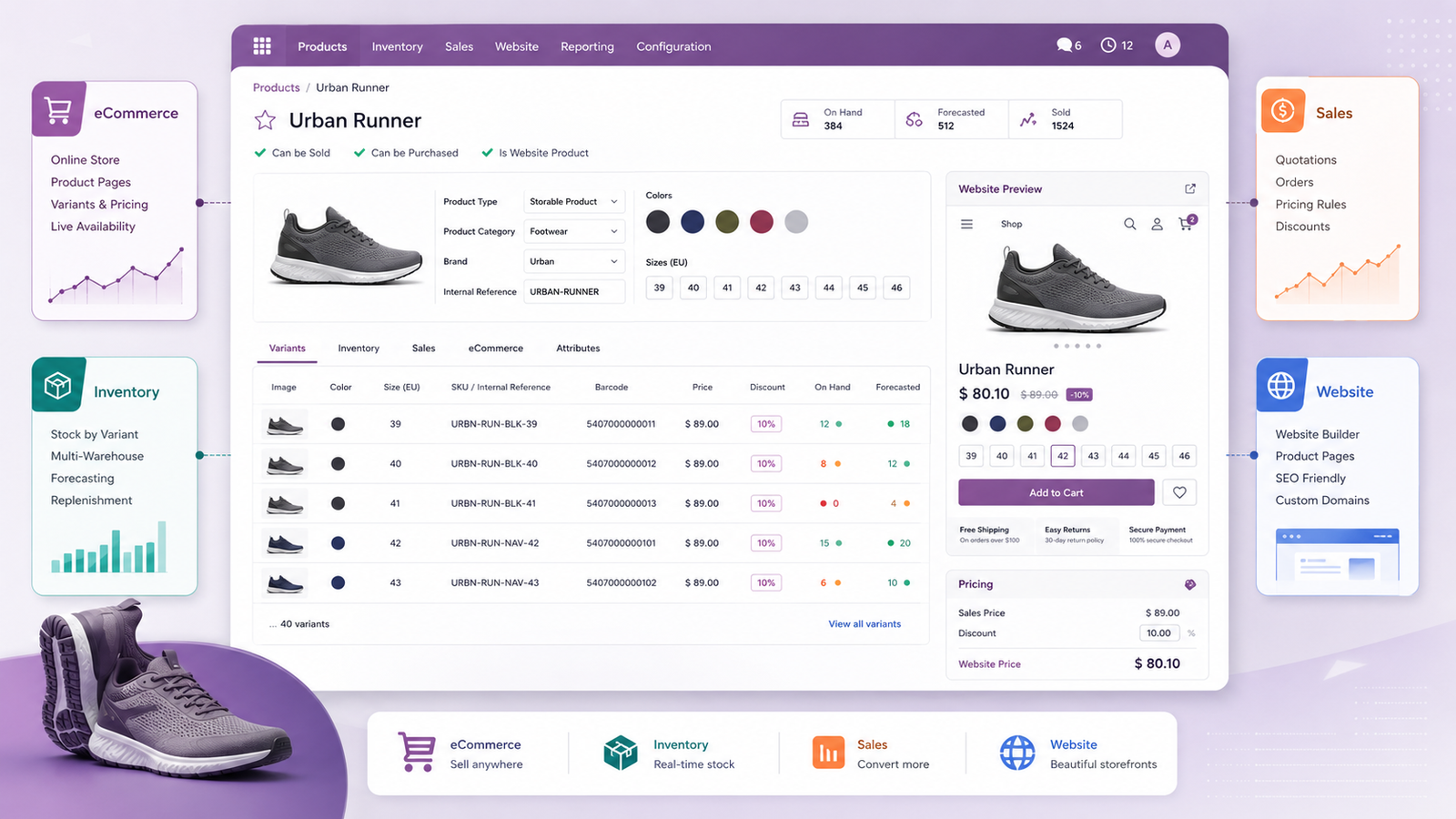
Manage product categories, variants, SKU codes, size and color options, product images, website descriptions, price lists, discounts, promotions, and stock availability in one place.
Centralize Orders from Every Sales Channel
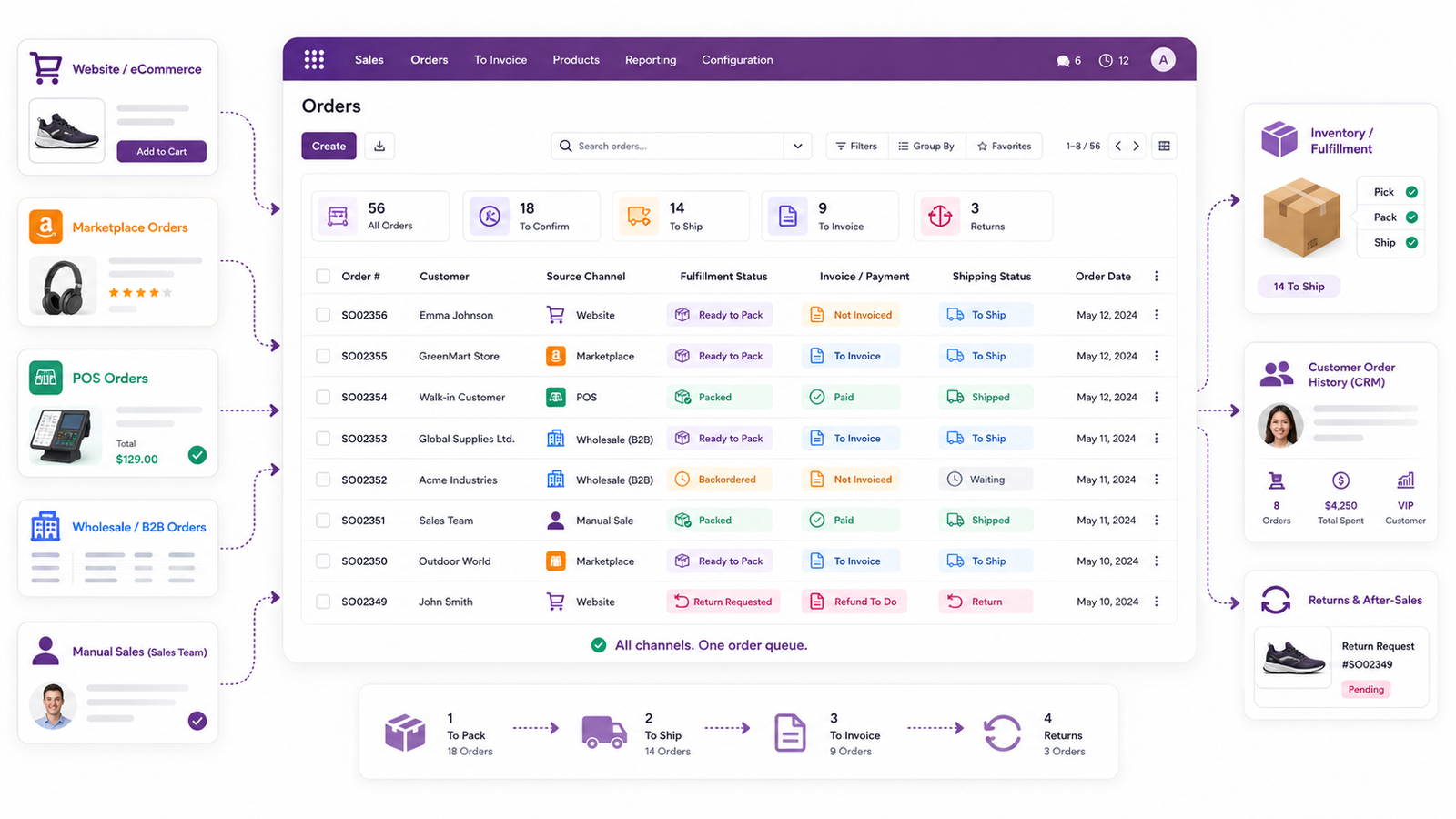
Manage website orders, marketplace orders, manual sales orders, POS orders, wholesale orders, customer order history, and order status updates from a single backend.
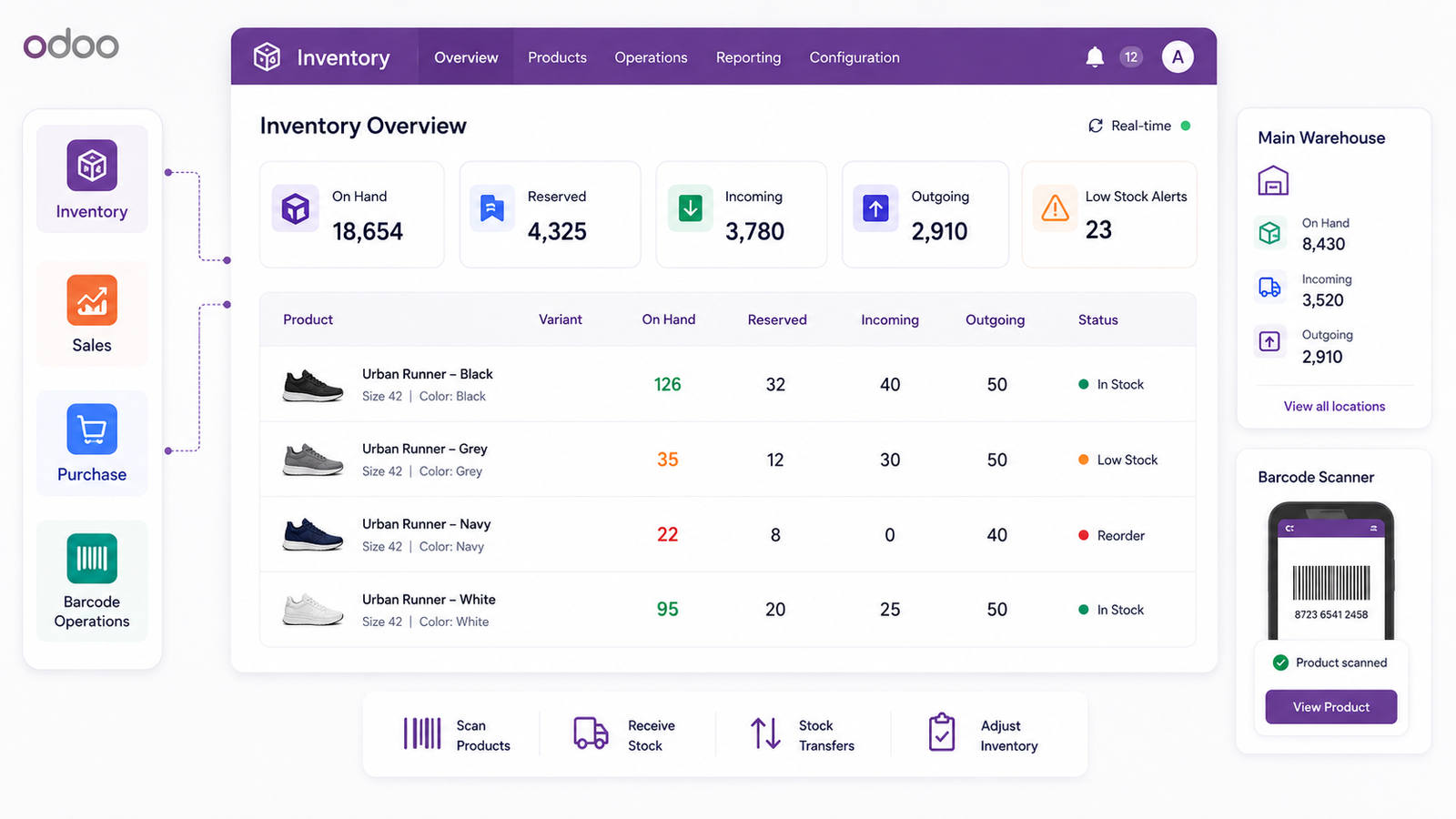
Keep Inventory Accurate in Real Time
Manage real-time stock levels, multiple warehouses, product-wise and variant-wise stock, reorder rules, stock reservations, internal transfers, low-stock alerts, and barcode operations.
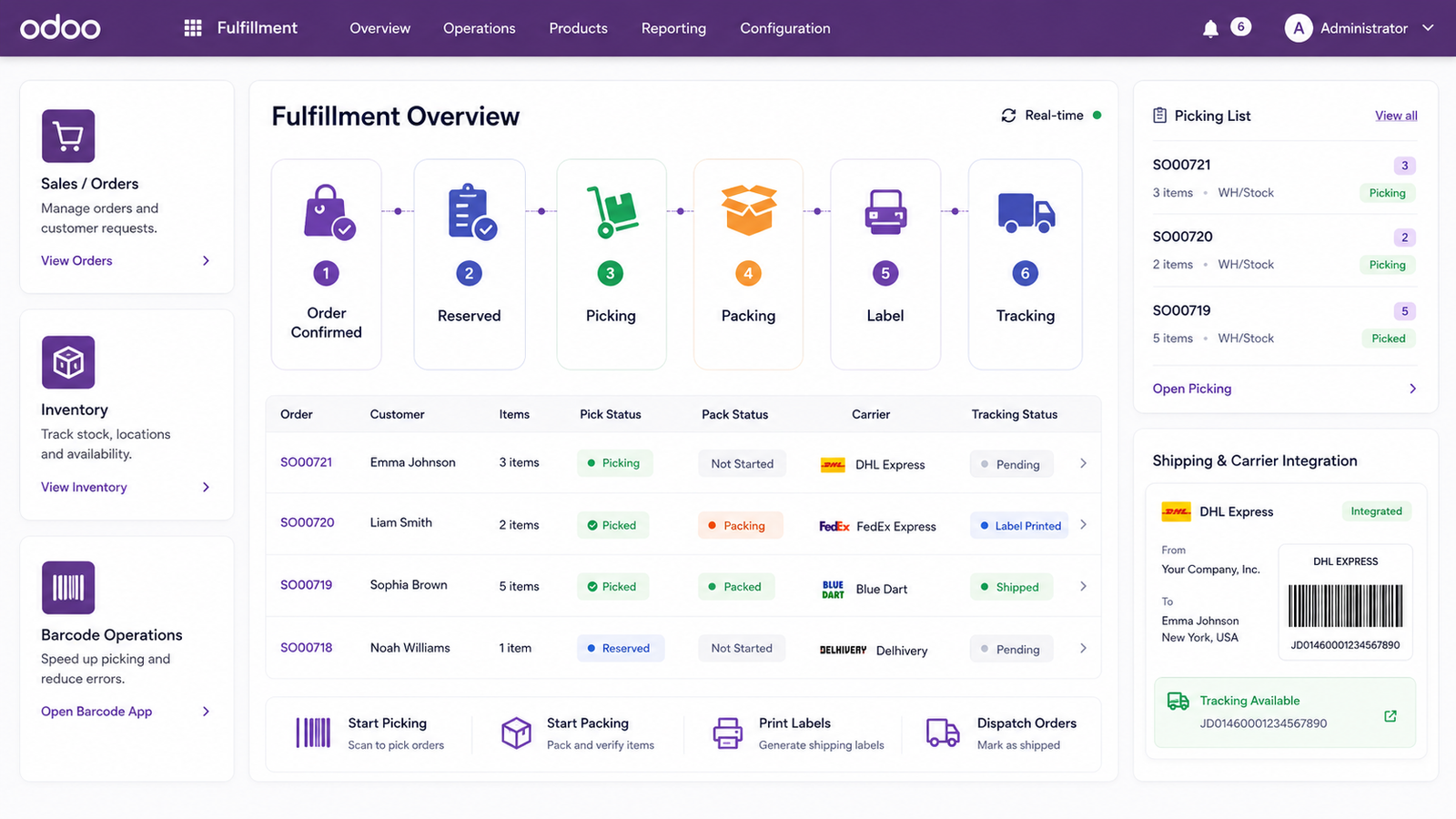
Speed Up Picking, Packing, and Dispatch
Follow a clear fulfillment process from order confirmation to inventory reservation, picking, packing, shipping label generation, and delivery tracking.
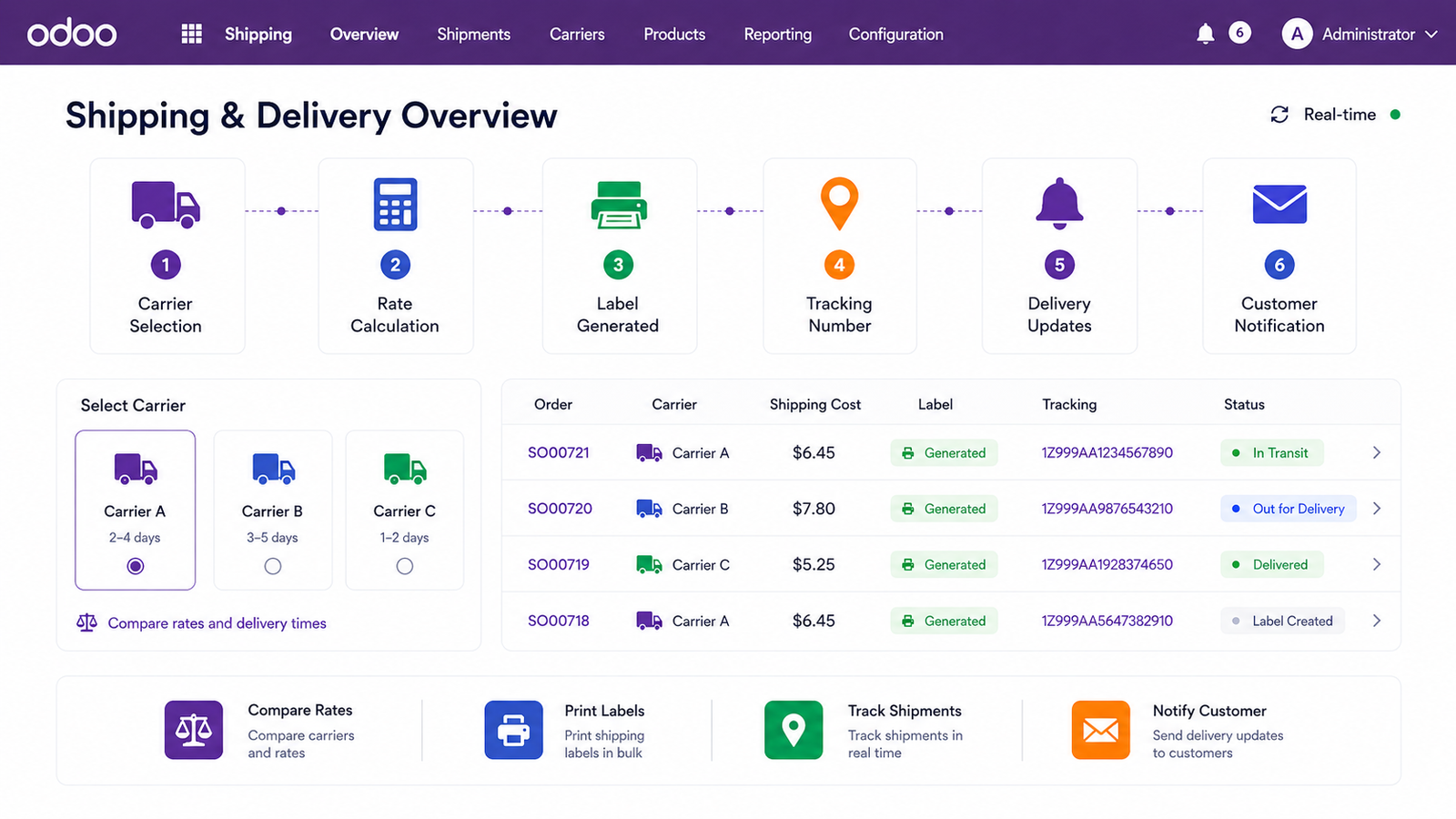
Automate Shipping and Delivery Management
Automate carrier selection, shipping cost calculation, label generation, tracking number updates, delivery status tracking, customer notifications, and multi-carrier management.
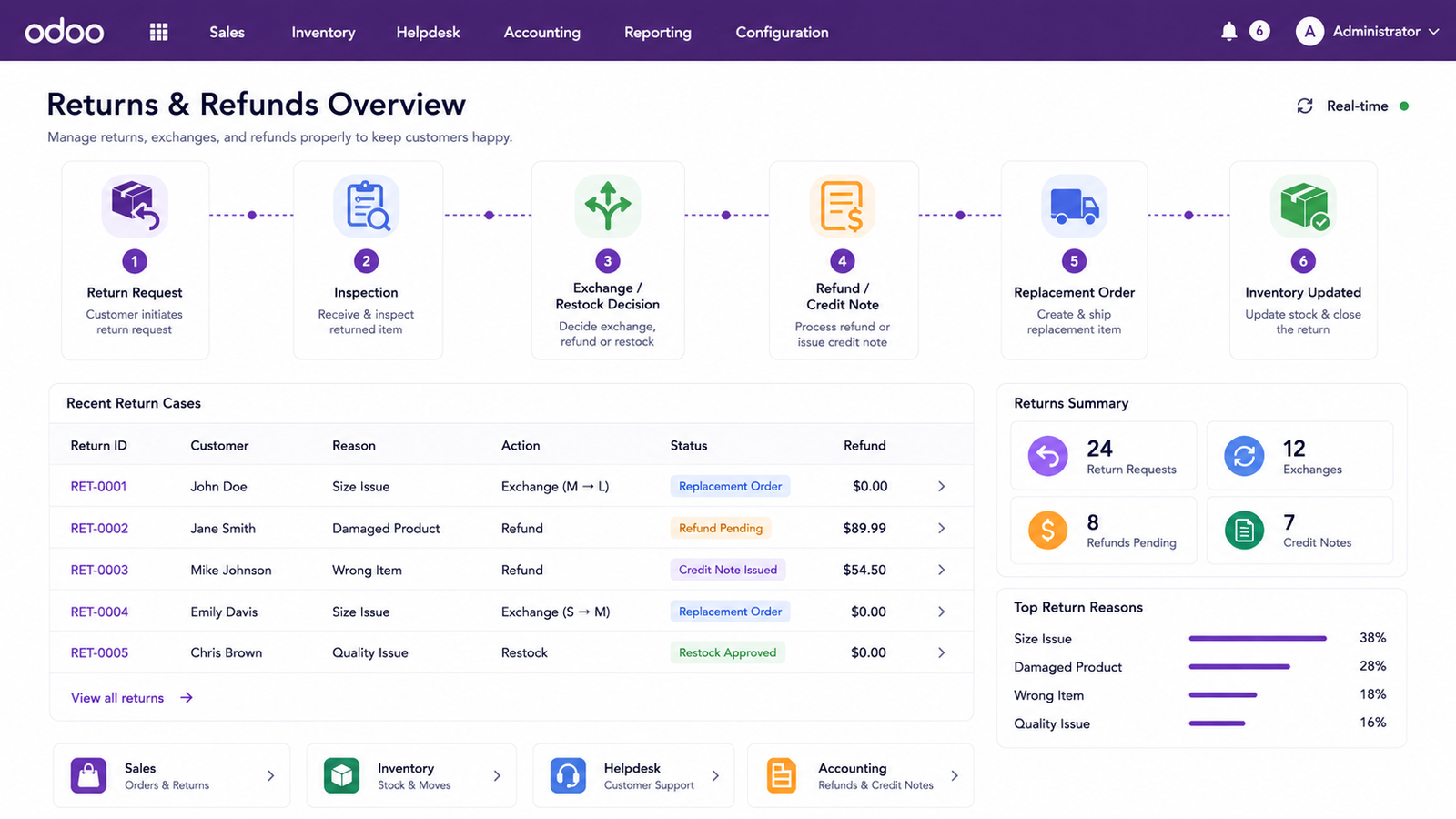
Manage Returns, Exchanges, and Refunds Properly
Create a structured return workflow for return requests, size exchanges, damaged product returns, refunds, credit notes, replacement orders, return reasons, and restocking decisions.
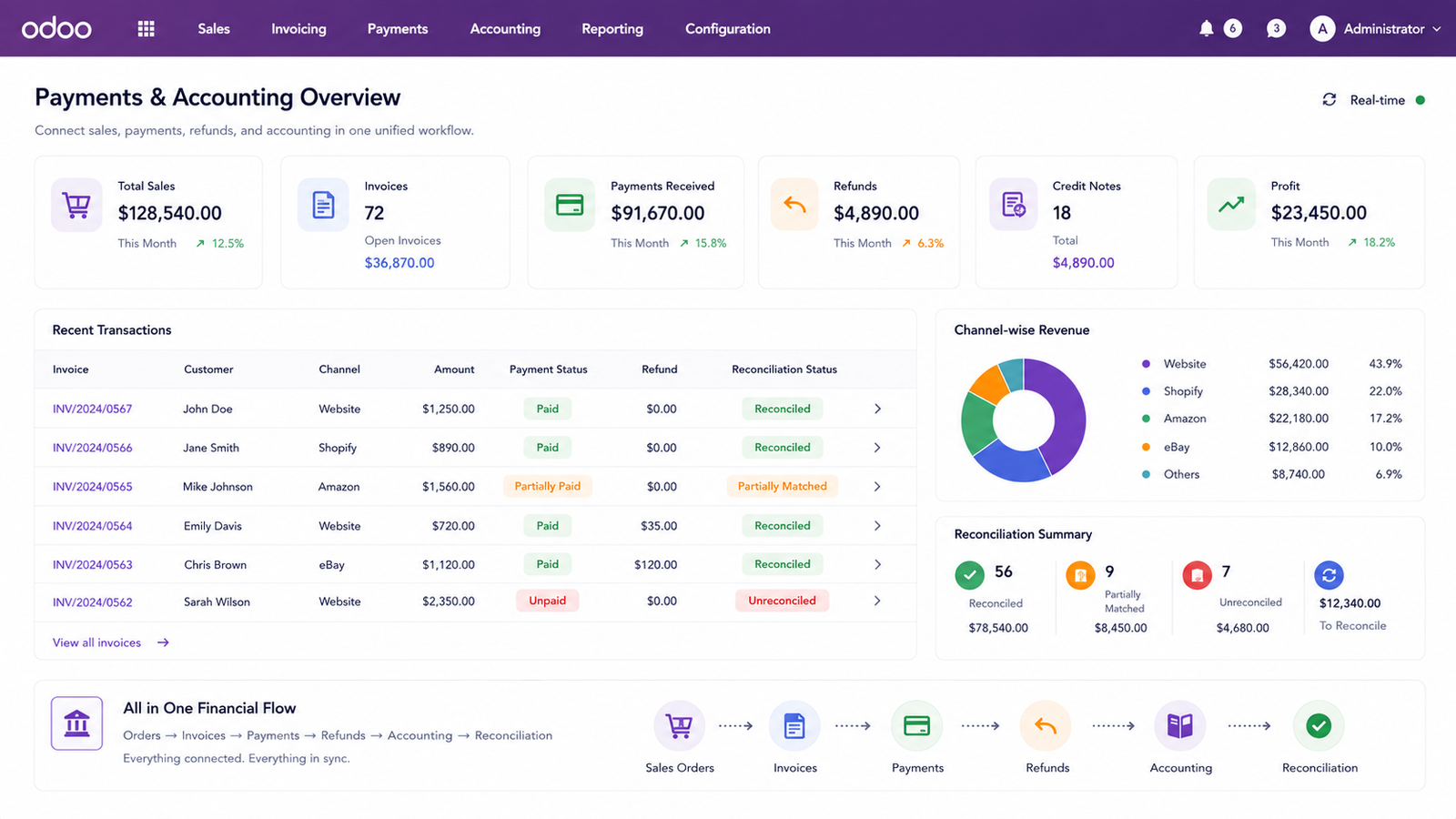
Connect Payments, Invoices, and Accounting
Connect customer invoices, online payments, refunds, credit notes, tax calculation, payment reconciliation, sales reports, profit tracking, and channel-wise revenue.
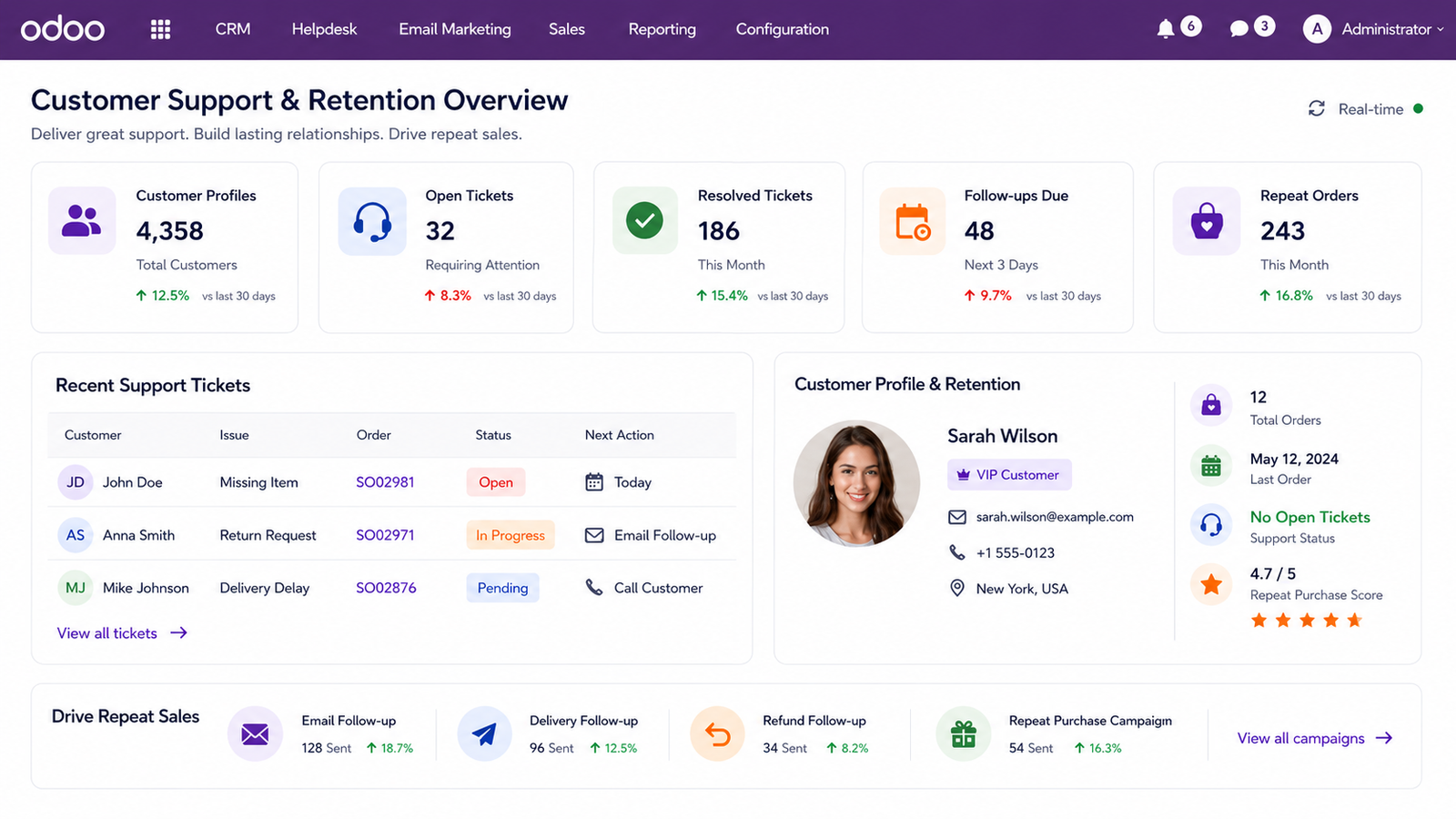
Improve Customer Support and Repeat Sales
Use Odoo CRM and Helpdesk to manage customer profiles, order history, support tickets, return requests, follow-up reminders, email communication, campaigns, and repeat sales opportunities.
Odoo Modules Useful for eCommerce Retail
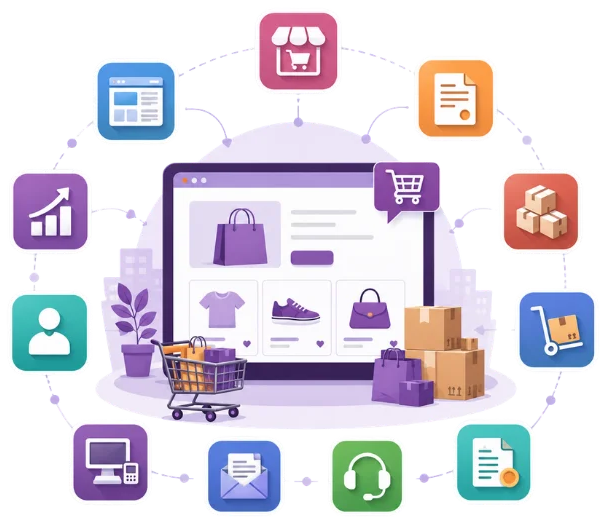
Odoo provides all essential modules required to manage online sales, inventory, accounting, customer support, marketing, and physical store operations.
Odoo eCommerce
For online storefront, product pages, cart, checkout, and customer orders.
Odoo Website
For landing pages, product pages, brand pages, and promotional pages.
Odoo Sales
For sales orders, quotations, order confirmation, and customer sales history.
Odoo Inventory
For stock management, warehouses, picking, packing, delivery, and product availability.
Odoo Purchase
For supplier orders, replenishment, vendor management, and procurement planning.
Odoo Accounting
For invoices, payments, refunds, taxes, credit notes, and financial reporting.
Odoo CRM
For customer relationship tracking, leads, follow-ups, and sales opportunities.
Odoo Helpdesk
For customer complaints, return queries, support tickets, and service requests.
Odoo Email Marketing
For promotional campaigns, abandoned cart follow-ups, engagement, and repeat sales.
Odoo POS
For brands that sell both online and through physical retail stores.

Best-Fit eCommerce Retail Businesses for Odoo
Odoo is suitable for growing eCommerce retail businesses that need better control over products, variants, inventory, orders, returns, accounting, and customer experience.
D2C Footwear Brands
Footwear brands manage multiple sizes, colors, SKUs, and frequent exchanges. Odoo helps track variant-wise stock, process size exchanges, and manage returns in a structured way.
Apparel and Fashion Brands
Fashion retailers deal with seasonal collections, fast-moving SKUs, and high return volumes. Odoo helps manage product variants, inventory, orders, and reverse logistics.
Beauty and Personal Care Brands
Beauty brands can manage product batches, expiry dates, online orders, promotions, and repeat customer purchases using Odoo.
Electronics and Accessories Sellers
Odoo helps electronics retailers manage product models, serial numbers, warranty tracking, delivery, invoicing, and customer support.
Multi-Channel Sellers
Businesses selling through websites, marketplaces, retail stores, and wholesale channels can use Odoo as one source of truth for stock, orders, and accounting.
Marketplace-First Businesses
Marketplace sellers can use Odoo to centralize order processing, inventory planning, shipping, accounting, and business reporting.
Our Odoo eCommerce Implementation Approach
We follow a structured implementation process to ensure your eCommerce operations are configured correctly, integrated smoothly, and ready for future growth.
Business Workflow Study
Analyze sales channels, inventory flow, shipping process, returns, and accounting operations.
Odoo Configuration
Configure eCommerce, Sales, Inventory, Purchase, Accounting, CRM, and Helpdesk modules.
Integration Setup
Connect websites, marketplaces, payment gateways, shipping carriers, and third-party systems.
Data Migration
Migrate products, customers, inventory, pricing, vendors, and historical business data.
Testing
Validate orders, payments, deliveries, returns, exchanges, refunds, and stock updates.
Training & Go-Live
Train users, support deployment, and ensure a smooth transition to the new system.
Ongoing Support
Provide support, enhancements, customizations, and scalability improvements.
Frequently Asked Questions
What is Odoo for eCommerce retail?
Odoo for eCommerce retail is an ERP solution that connects your online store with inventory, sales, shipping, payments, accounting, customer support, and reporting. It helps retailers manage the complete online selling process from one platform.
Can Odoo manage product variants like size, color, and style?
Yes. Odoo can manage product variants such as size, color, material, style, model, and other options. This is useful for footwear, apparel, accessories, beauty, electronics, and other retail businesses.
Can Odoo help prevent overselling?
Yes. Odoo updates inventory based on sales and stock movements, helping businesses maintain better stock visibility and reduce overselling across sales channels.
Does Odoo support shipping integration?
Yes. Odoo can be connected with shipping carriers to manage delivery charges, courier selection, shipping labels, tracking numbers, and delivery updates.
Can Odoo manage returns and exchanges?
Yes. Odoo supports return and exchange workflows through sales, inventory, and accounting processes. Businesses can manage returned products, refunds, credit notes, exchanges, and restocking decisions.
Is Odoo suitable for D2C brands?
Yes. Odoo is suitable for D2C brands because it supports product management, online orders, real-time inventory, fulfillment, shipping, returns, payments, and customer communication in one system.
Can Odoo connect with marketplaces?
Yes. Odoo can be integrated with marketplaces and external sales channels depending on business requirements. This helps sellers centralize orders, stock, and accounting.
Is Odoo useful for both online and offline retail?
Yes. Odoo can support both eCommerce and POS operations, making it useful for retailers selling through websites, marketplaces, and physical stores.