






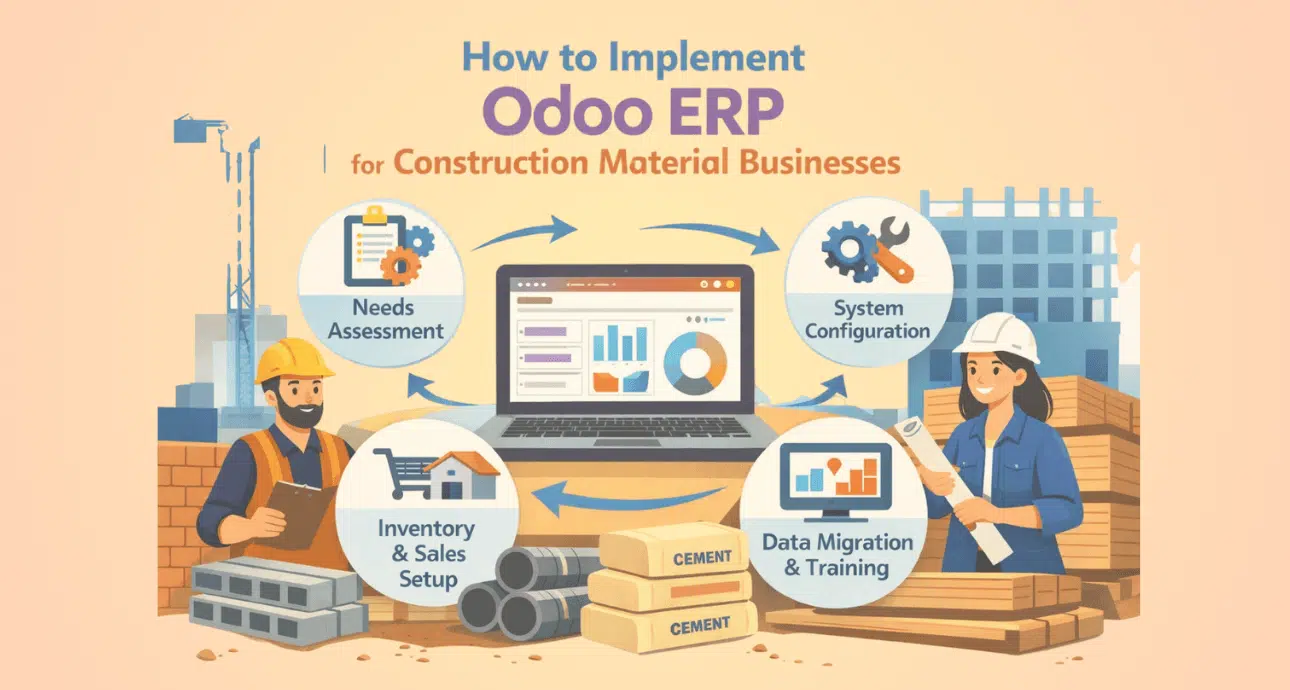
How to Implement Odoo ERP for Construction Material Businesses | Complete ERP Guide
The construction materials industry operates in a complex environment involving suppliers, contractors, warehouses, transportation, and project-based deliveries. Managing procurement, inventory, pricing, logistics, and accounting across multiple projects can quickly become difficult without a centralized system.
Many construction material businesses still rely on spreadsheets or disconnected software to manage operations. As the business grows, this approach leads to inventory mismatches, delayed deliveries, pricing errors, and poor financial visibility.
This is where Odoo ERP becomes a powerful solution. With its modular architecture, Odoo helps construction material companies manage procurement, inventory, sales, accounting, and logistics in a single integrated platform.
In this guide, we explain how construction material businesses can successfully implement Odoo ERP, the common challenges involved, and the step-by-step process to ensure a smooth ERP implementation.
Why Construction Material Businesses Need ERP
Construction material suppliers deal with a wide range of operational challenges that traditional systems struggle to handle.
Common problems include:
- Difficulty tracking inventory across multiple warehouses
- Managing bulk orders and project-based deliveries
- Handling different pricing for dealers, contractors, and projects
- Tracking material deliveries in phases
- Monitoring credit limits and payment collections
- Managing procurement from multiple suppliers
Without ERP, these processes become fragmented across different systems.
An integrated ERP like Odoo helps businesses centralize operations and improve visibility across departments.
Key ERP Modules Required for Construction Material Businesses
When implementing ERP, it is important to configure modules that match the operational workflow of construction material trading and distribution.
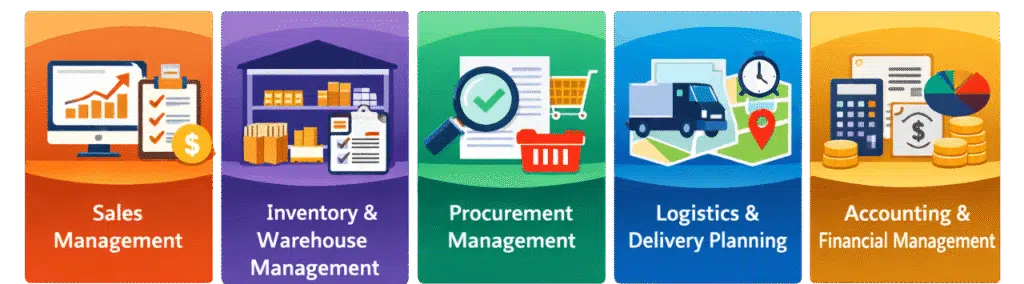
Sales Management
The sales module helps manage:
- Customer inquiries from contractors and dealers
- Quotation preparation for BOQ-based orders
- Contract pricing
- Sales orders and delivery schedules
Sales teams can easily track project orders and maintain a clear record of quotations and negotiations.
Inventory and Warehouse Management
Inventory is one of the most critical areas in the construction material business.
ERP helps manage:
- Multiple warehouses
- Batch or lot tracking
- Stock reservation for project orders
- Material transfers between warehouses
- Real-time stock visibility
This ensures that sales teams always know the actual stock availability before confirming orders.
Procurement Management
Construction material companies often purchase from multiple suppliers.
ERP helps manage:
- Purchase requests from inventory
- Supplier quotation comparison
- Purchase order approvals
- Supplier lead time tracking
- Vendor performance monitoring
This improves procurement planning and reduces supply chain disruptions.
Logistics and Delivery Planning
Deliveries in the construction industry often happen in phases depending on project progress.
ERP helps coordinate:
- Delivery scheduling
- Transportation planning
- Delivery challans
- Partial deliveries
- Dispatch tracking
This ensures materials reach construction sites at the right time.
Accounting and Financial Management
ERP integrates financial processes directly with operational workflows.
This allows businesses to manage:
- Sales invoicing
- Supplier payments
- Credit management
- GST compliance
- Financial reporting
With integrated accounting, finance teams gain real-time financial visibility.
Step-by-Step ERP Implementation Strategy
Implementing ERP requires proper planning and execution. A structured implementation approach reduces risks and ensures successful adoption.
Step 1: Business Process Analysis
The first step is to understand the company’s existing workflows.
This includes analysing:
- Sales order management
- Procurement processes
- Inventory management
- Delivery workflows
- Accounting operations
The goal is to identify inefficiencies and design improved workflows using ERP.
Step 2: ERP Module Selection
Once business processes are mapped, the next step is selecting the required ERP modules.
For construction material businesses, the typical modules include:
- Sales
- Inventory
- Purchase
- Accounting
- CRM
- Logistics management
The modular architecture of Odoo allows companies to start with essential modules and expand later.
Step 3: Data Migration
Existing data from spreadsheets or legacy systems must be migrated into ERP.
This includes:
- Customer records
- Supplier databases
- Product catalogs
- Inventory levels
- Financial records
Data accuracy is critical to ensure smooth ERP operations.
Step 4: System Configuration
ERP must be configured to match the company’s operational workflow.
Typical configurations include:
- Warehouse structures
- Pricing rules
- Credit limits
- Tax configurations
- User roles and permissions
This step ensures the ERP system reflects the real business processes.
Step 5: Integration with Other Systems
Construction businesses often use other software tools such as:
- E-commerce portals
- logistics platforms
- third-party accounting systems
ERP integration ensures seamless data flow between systems.
Step 6: Employee Training
User adoption is one of the most important factors in ERP success.
Training should be provided for:
- Sales teams
- Procurement teams
- Warehouse staff
- Accounting teams
- Management
When employees understand how ERP improves their workflow, adoption becomes easier.
Step 7: Testing and Go-Live
Before full deployment, the system must be tested thoroughly.
Testing includes:
- Sales order workflows
- Purchase processes
- Inventory movements
- Financial transactions
Once validated, the ERP system goes live across the organization.
Common Challenges During ERP Implementation
Despite its benefits, ERP implementation may face several challenges if not managed properly.
Data Migration Issues
Incorrect or incomplete data can cause problems during ERP adoption.
Proper data cleaning and validation are essential before migration.
User Resistance
Employees accustomed to traditional systems may resist change.
Providing adequate training and demonstrating benefits helps overcome resistance.
Incorrect Workflow Design
Employees accustomed to traditional systems may resist change.
Providing adequate training and demonstrating benefits helps overcome resistance.
Benefits of Implementing ERP in Construction Material Businesses
When implemented properly, ERP can significantly improve operational efficiency.
Key benefits include:
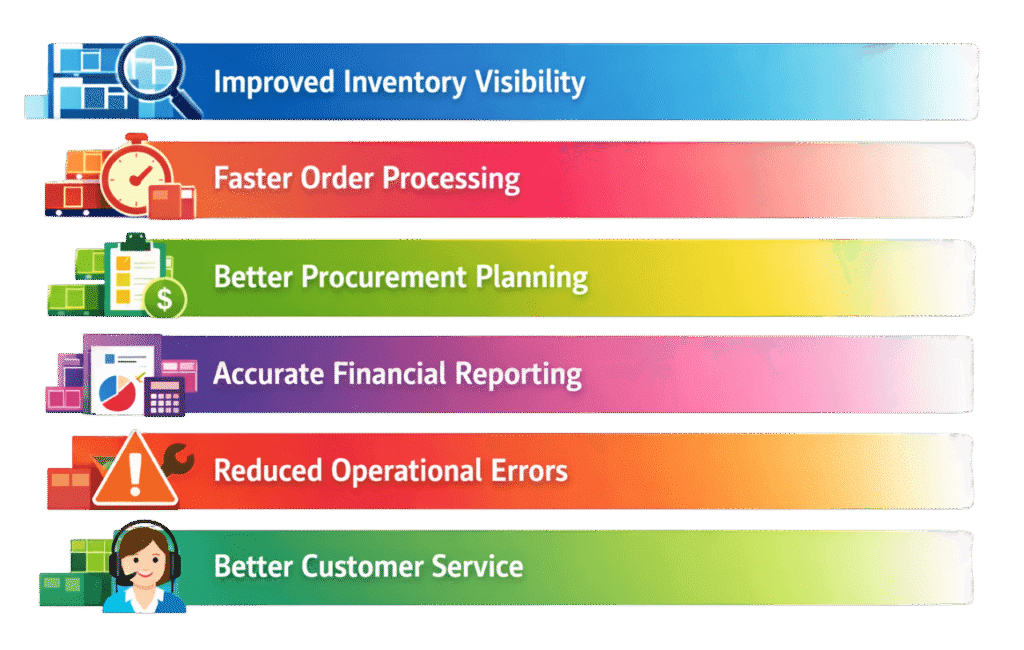
With centralized data, management teams can make better strategic decisions.
Why Odoo is a Strong ERP Choice for Construction Material Companies
Many ERP platforms are complex and expensive to implement.
However, Odoo offers several advantages for construction material businesses:
- Modular architecture
- Lower implementation cost compared to traditional ERP
- Flexible customization
- Strong inventory management capabilities
- Integrated accounting and sales modules
- Scalable platform for growing businesses
These capabilities make Odoo particularly suitable for companies involved in construction materials trading, distribution, and project-based supply.
For businesses evaluating ERP platforms, you can also explore our detailed analysis of Advantages and Disadvantages of Odoo ERP to understand how it compares with other systems.
Conclusion
Construction material businesses operate in a highly dynamic environment involving multiple stakeholders, warehouses, suppliers, and construction projects. Managing these operations using disconnected tools often leads to inefficiencies and operational delays.
Implementing Odoo ERP enables companies to streamline operations, improve inventory management, and gain complete visibility into their business processes.
With the right implementation strategy, ERP can become a powerful foundation for scaling construction material businesses while improving operational efficiency and profitability.




04 Comments
domperidone india brand
03/05/2026domperidone india brand
domperidone india brand
how much semaglutide injection for weight loss
12/05/2026how much semaglutide injection for weight loss
how much semaglutide injection for weight loss
ketoconazole antifungal summary
15/06/2026ketoconazole antifungal summary
ketoconazole antifungal summary
terbinafine expert overview
15/06/2026terbinafine expert overview
terbinafine expert overview